The War That Killed the World Order
How the 2026 Iran war revealed that the rules-based international order was always a system of selective enforcement — binding on the weak, optional for the strong
At approximately the same hour on April 7, 2026, two statements were issued from opposite sides of a war.
The Islamic Revolutionary Guard Corps: “We will target U.S.-affiliated infrastructure in a manner that will deprive America and its allies of the region’s oil and gas for years. U.S. regional partners should know that until now, due to neighbourly goodwill, we have exercised a great degree of restraint. From now on, all these considerations have been lifted.”
The President of the United States: “A whole civilization will die tonight, never to be brought back again. I don’t want that to happen, but it probably will.”
One side promising to destroy the energy infrastructure of an entire region for years. The other announcing the death of a civilisation. Both in public. Both on the record. And no institution on earth can stop either of them.
The War That Had No Legal Basis
On February 28, 2026, the United States and Israel launched an air campaign against Iran without a UN Security Council resolution, without an armed attack by Iran, without consultation with NATO allies, and without congressional authorisation.
Over 100 international law experts — including the President and President-elect of the American Society of International Law — stated the strikes “clearly violated the United Nations Charter prohibition on the use of force.” There is “no evidence that Iran posed an imminent threat.” Pentagon briefers acknowledged to congressional staff that Iran was not planning to strike U.S. forces unless Israel attacked first. Stanford’s Allen Weiner says at least the previous administrations “advanced legal justifications — losing arguments, but we tried.” President Trump said, I don’t need international law.” :contentReference[oaicite:0]{index=0}
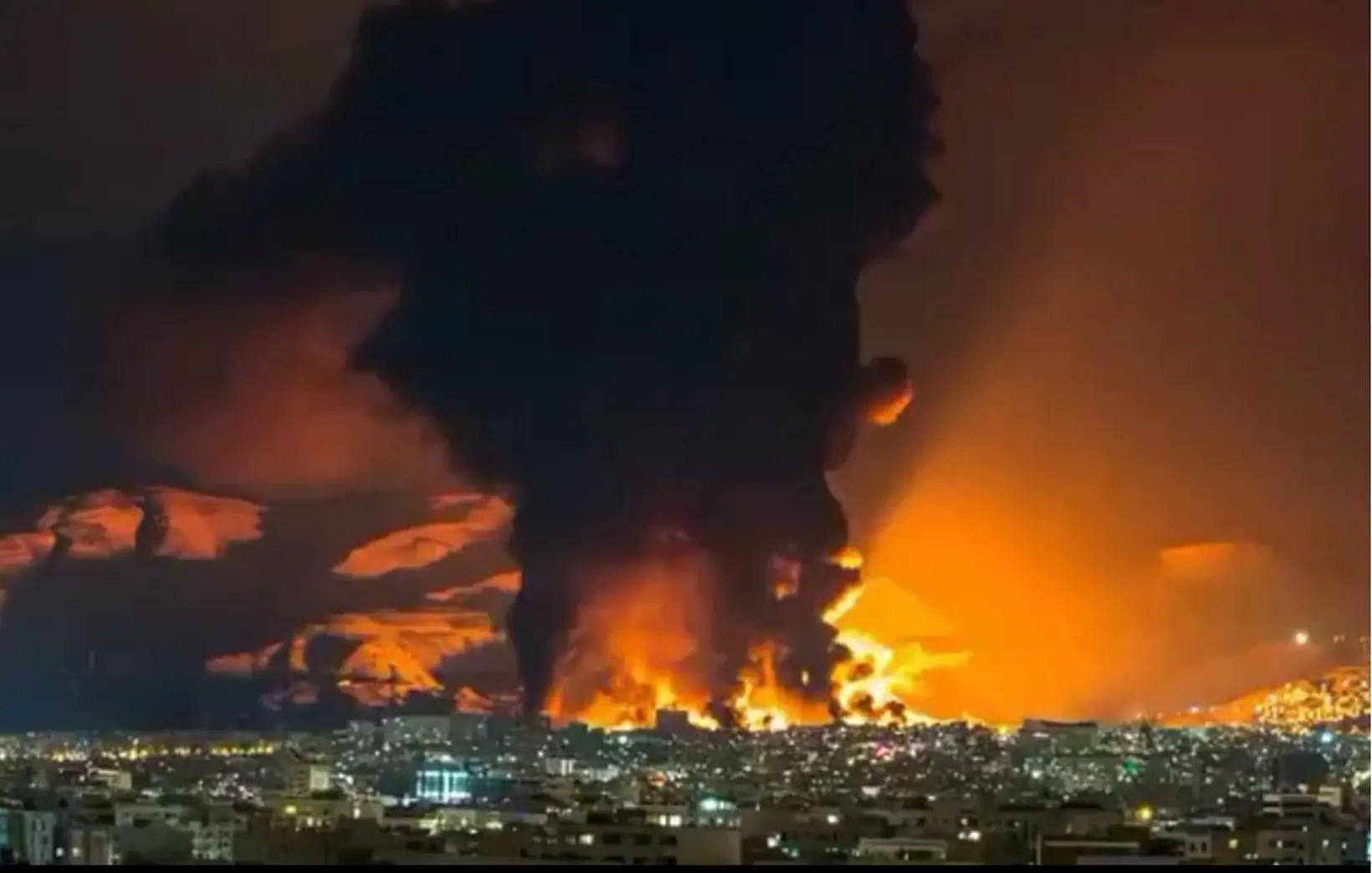
In the 37 days since: the Shajareh Tayyebeh girls’ school in Minab was triple-tapped on the first day of the war — a parent received a call that his daughter survived the first strike; before he arrived, the second hit the prayer room where surviving children had been moved. At least 170 dead, most girls aged 7-12. Human Rights Watch: “an unlawful attack” that “should be investigated as a war crime.” Thirty fuel depots struck across greater Tehran; black acid rain fell on a city of 10 million. Bushehr nuclear plant struck three times. The B1 bridge destroyed — thirteen civilians killed because, as Trump told Axios, “I felt they were not being serious. So I attacked the bridge.” Total: 67,414 civilian sites struck, 498 schools, 236 health facilities. At least 1,443 civilians killed, 217 children.
And from within, the accountability architecture was systematically dismantled.
Hegseth removed the Army, Navy, and Air Force Judge Advocates General — the military lawyers who counsel against unlawful strikes. Trump sanctioned ICC judges. He ordered all U.S. satellite providers to indefinitely withhold imagery of Iran. The rules, repudiated. The lawyers, removed. The court, sanctioned. The evidence, suppressed.
90 Days from Impunity to Annihilation
“I don’t need international law.” (January 8.) Strikes “just for fun.” (March 13.) “So I attacked the bridge.” (April 3.) “Open the fuckin’ Strait, you crazy bastards. Praise be to Allah.” (April 5.) Then, at his April 7 press conference: “Not at all” worried about war crimes. Called Iranian leaders “animals.” Said civilians “would be willing to suffer” the destruction of their infrastructure “in order to have freedom.” Said he would “keep the oil, and make plenty of money.” Then, at 5:30 PM: “A whole civilization will die tonight.”
No tribunal in history has had this quality of evidence of intent from the mouth of the accused.
Former JAGs: these stated targets “would amount to the most serious war crimes.” Col. Wilkerson, former chief of staff to Colin Powell: “We are bombing people. These are all war crimes.” Rona of Cardozo Law: targeting a desalination plant “would be an act of terrorism” under both international and U.S. law. The ICRC President: “War on essential infrastructure is war on civilians.”
His own former ally, Marjorie Taylor Greene: “This is not making America great again, this is evil.” Democrat Ansari introduced impeachment articles against Hegseth. The UN spokesperson warned that even military objectives cannot be struck if the civilian harm is excessive.
The Bodyguards Who Couldn’t Move
The Veto That Protects the Aggressor
Resolution 2817 condemned Iran’s retaliatory attacks. It contained no mention of the U.S.-Israeli strikes that started the war. Russia’s resolution calling on “all parties” to stop was vetoed by the U.S. “The Security Council is paralyzed because the United States will veto any resolution condemning its own actions.” The P5 veto, inserted at U.S. insistence in 1945, ensures the organisation can never be used against its founders.
Tonight, a president announces the death of a civilisation and the body designed to prevent it cannot act — because he holds the key to its own lock.
The Alliance That Cannot Say No to Its Leader
Germany: “This is not our war.”
UK: “We will not be drawn in.”
Spain closed airspace.
Italy denied base access.
France blocked weapons flights.
Poland refused Patriot relocation.
Trump suggested withdrawing from NATO.
But no ally could do more than refuse, because their “central priority remains Ukraine” — and the security umbrella they need against Russia is held by the same hand now bombing Iran.
The Countries That Need the Arsonist to Be Their Firefighter
Japan imports 95% of its oil from the Gulf. All three Pacific allies declined to confront Washington — because the country waging the war also protects them from China and North Korea. The IRGC’s promise to deprive the region of oil and gas “for years” is directed at exactly these countries: the ones who cannot afford to lose either their energy supply or their security patron, and who may now lose both.
The Court That Was Built to Be Ignored
Several media commentators called on Iran to file an Article 12(3) declaration — Palestine and Ukraine used this mechanism, leading to warrants against Netanyahu and Putin. But the U.S. has the “Hague Invasion Act” and has sanctioned the court’s judges. The court of last resort cannot reach the accused.
What Broke Tonight
The rules of war, by mutual declaration. The U.S. announced the death of a civilisation. The IRGC announced that all restraint is lifted. Both sides said so in the same hour. The states caught between them have no mechanism to constrain either.
The prohibition on force. If the Security Council can only condemn the country that was attacked — because the attacker holds the veto — then the next state considering war need only look at February 28, 2026.
The transatlantic alliance. “Military alliances are based on trust. It’s hard to see how any European country will now trust the United States.” “If the U.S. no longer defends and instead attacks, the basic rationales for NATO’s existence will have vanished.”
The myth of accountability. Every institution that could restrain the United States is either controlled by it (the veto), dependent on it (the alliances), or unenforceable against it (the ICC). The architecture does not merely fail to restrain the architect. It prevents anyone else from doing so.
The monopoly on order. The Islamabad Accord, the China-Pakistan five-point proposal, Turkey’s shuttle diplomacy, Iran’s selective Hormuz exemptions for “friendly nations.” When the architecture cannot constrain its own creator, the case for a different architecture becomes existential.
The precedent. Any nuclear-armed state with a veto can now: launch a war of aggression; strike schools, hospitals, and nuclear facilities; announce the death of a civilisation on social media; remove its own military lawyers; sanction the international court; suppress satellite evidence; and face no consequence. And when the other side responds by lifting all restraint — as the IRGC did tonight — that too will have no consequence. Escalation without limit, on both sides, with nothing to stop it.
What Comes After the Pretence
The world order of 1945 rested on a bargain: the victors would write the rules and submit to them — or at least maintain the fiction that they did. That fiction held for eight decades.
On April 7, 2026, both sides abandoned it in the same hour. The architect of the world order announced the death of a civilisation. The state the order was designed to contain said all restraint is over. Between them sit the Gulf states, the Strait of Hormuz, 20% of the world’s oil, and the populations of a dozen countries who did not choose this war and cannot escape it.
The Iran war did not destroy the world order. It revealed that the order was always a system of selective enforcement — binding on the weak, optional for the strong. What died was not the rules. The rules are clear. What died was the architecture that was supposed to enforce them — designed by the victors of 1945 to constrain future aggressors, which contains no mechanism to constrain the victors themselves.