Calm by Design: A Dubai Resident’s Account of Trust at Scale
When missile and drone sirens become routine, trust becomes infrastructure — how the UAE built calm as a public good.

From early March 2026, residents of the UAE found themselves becoming unintentional students of geopolitics, history, and military strategy. Words like interceptions, UAVs, and layered air defences became a part of everyday conversations. Like clockwork, every unfamiliar loud sound we heard sent us reaching for our phones, checking WhatsApp groups for confirmation that we weren’t imagining it. The public security alerts by NCEMA, which initially cut through any silence and dreamstates, became an everyday occurrence and served as a reminder that we're living through anything but ordinary times
All of this paints a picture of panic, only worsened by relentless global news cycles that had loved ones from across the world terrified and praying for our safety, asking us to “stay safe”, to which my response without any hedging or qualification was that I actually am.
We were living through historic events, yes, but we were calibrating to it in real time too. This happens when you trust the systems designed to protect you.
As therapists say, communication is key
At no point did we, as residents, feel like we were in the dark. This was largely due to the clarity and consistency of communication. In moments like these, clarity forms the bedrock of societal stability.
Even small changes, like the aforementioned NCEMA alert which changed depending on the time of day it is issued, reflected a sensitivity to public psychology during a prolonged period of tension. This same intent was evident in a timely media briefing, where the press as well as the audience sitting at home was taken through the situation as it evolves. Different arms of government also addressed practical concerns around food security and supply chains that potentially could affect the daily lives of a resident.
Also throughout this period, social media, the primary source of information for most of us, was leveraged to its full potential. The Dubai Media Office, the Ministry of Defence, and other government entities consistently shared updates in both Arabic and English.
Equally important was the firm stance on misinformation. The emphasis on relying on verified sources, and the consequences of proliferating unverified information set a boundary early. It reduced noise at a time when it could have escalated uncertainty.
Physical Safety
Despite having legitimate threats to physical safety owing to proximity, these communication systems helped us understand the efficiency and power of the defence systems that UAE had in place.
More than 1,100 missiles and drones have been launched at the UAE since February 28, with the overwhelming majority intercepted by the country’s air defence systems, according to the Ministry of Defence. Daily updates on interceptions, along with cumulative figures, helped us better understand and contextualise the risk.
Leadership that leads
A few days into the escalation, videos began circulating of Sheikh Mohamed bin Zayed and Sheikh Mohammed bin Rashid Al Maktoum, the President and Prime Minister of the UAE alongside other members of leadership at a café in Dubai Mall, and then again the next day at an iftar gathering.
It would be almost instinctual to dismiss this as symbolic and just for optics. But it worked, because visibility carries weight.
Over and above statements and announcements, having them occupy the same spacce as those that residents were occupying sent a message of confidence and that they understand that reassurance is often conveyed through what is done, not just what is said.
Calm does not mean naivete
From the outside, this level of calm can seem difficult to reconcile, often interpreted as narrative, or control, or even denial.
But as someone who remained here from the first interception to the ceasefire announcement on April 8, life, to a large extent, stayed recognisably normal. That isn’t to say there was no awareness of risk, or moments of concern, or that caution was ever abandoned.
What this period made clear is that calm at this scale is not incidental. It is the outcome of systems that communicate clearly, respond visibly, and function when they are needed most.
And when those systems hold, calm doesn’t need to be asserted.
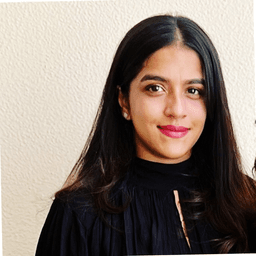
Tanisha Moopen 🇦🇪
Tanisha Moopen is a writer and communications strategist based in Dubai, United Arab Emirates. She works on brand strategy and executive positioning for organizations across sectors. She also helps run a restaurant, which continues to give her an unconventional education in consumer psychology and human behavior.